What to know about bulky rubbish pickup delays Kingston
Posted on 23/06/2026
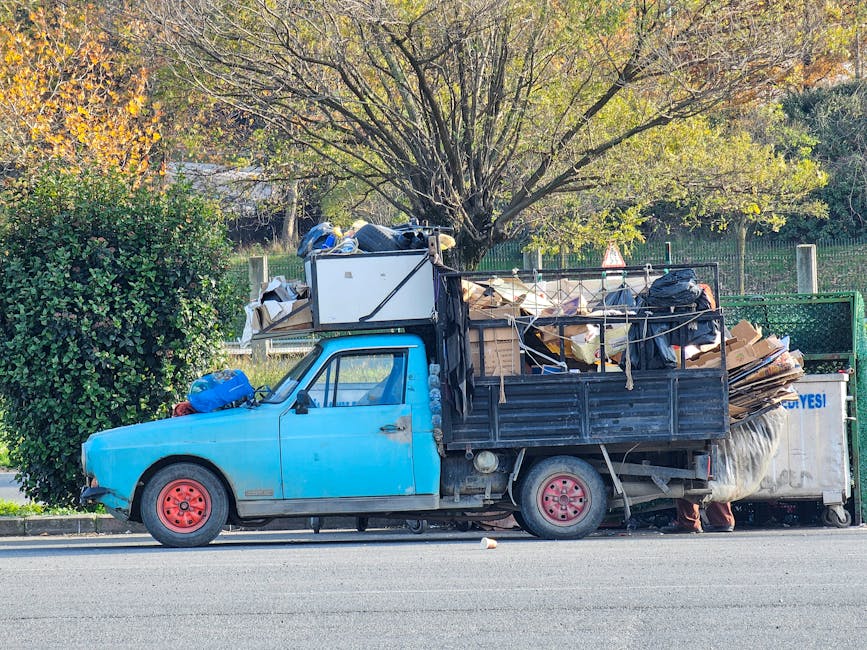
If you are waiting on a bulky rubbish pickup in Kingston and the day is slipping by with no van in sight, you are not alone. Delays happen for all sorts of reasons: traffic, access problems, wrong item details, missed collection windows, and the kind of last-minute snags that seem to appear only when you have already dragged a sofa to the kerb. This guide explains what to know about bulky rubbish pickup delays Kingston, why they happen, how the process usually works, and what you can do to keep things moving.
Whether you are clearing a single awkward item or planning a bigger tidy-up, knowing the common delay points can save you time, money, and a fair bit of frustration. Let's get into the practical stuff.
Why bulky pickup delays matter in Kingston
Bulky rubbish delays are more than a small inconvenience. In a busy area like Kingston, they can disrupt moving days, renovation schedules, end-of-tenancy cleans, shop refits, office clear-outs, and weekend decluttering plans. If a settee is sitting in the hallway or a broken wardrobe is blocking a bedroom, the delay starts to affect the whole household.
There is also a practical side people sometimes overlook. Left-out bulky items can attract complaints from neighbours, create trip hazards, and make access tighter on already busy streets. If you live near central Kingston, by the river, or on narrower residential roads, a delay can quickly turn into a logistics problem. That is why it helps to know not just when your collection might happen, but what the weak points are.
To be fair, most delays are not mysterious. They usually come down to one of three things: access, scheduling, or item mismatch. Once you understand those, you can avoid a lot of back-and-forth.
If you are working through a bigger property clean-up, you may also find our related local guides useful, especially the Kingston Hill guide for large items and the practical advice in narrow street rubbish collection tips.
How bulky rubbish pickup delays usually happen
A bulky rubbish pickup is meant to be straightforward: you book the collection, set out the items as instructed, and the crew removes them within the agreed window. But in real life, the process depends on a chain of little checks. If any one of them slips, the job can be pushed back.
Typical delay points
- Access problems: parked cars, tight alleys, low hanging branches, locked gates, or items placed too far from the vehicle access point.
- Unclear booking details: the wrong item count, the wrong pickup location, or a description that misses something important like a dismantled bed frame or extra mattress.
- Timing pressure: heavy demand on Fridays, month-end moving days, or after bad weather can all slow things down.
- Item preparation issues: collections can be delayed when items are not ready, still assembled, or mixed with general waste that needs separating.
- Traffic and street layout: Kingston can be busy at peak times, and that matters more than people think.
Sometimes the delay is simple: the crew is late because another job ran over. Sometimes it is less simple: they could not safely access the property, so the job has to be rebooked. That difference matters, because it changes what you need to do next.
There is a useful distinction here. A delay means the collection is still planned but shifted. A failed collection means the crew could not complete the job as booked. That second one is the annoying one, because it often means extra waiting and, depending on the terms, possible extra cost.
What a good process usually looks like
- You confirm the item type and approximate volume.
- The collection is booked for a practical window.
- You prepare the items and make access as easy as possible.
- The crew arrives, checks the load, and removes it safely.
- Any recycling or sorting is handled afterwards in line with the operator's process.
If your collection involves mixed waste, renovation debris, or heavier items, it can help to look at broader service information such as the services overview and the page on waste removal Kingston. These pages help you understand what is and is not usually included in a standard bulky pickup.
Key benefits and practical advantages
Knowing how delays work sounds slightly dull until you are staring at a mattress and a hallway full of boxes. Then it suddenly feels very relevant. The benefit is not just avoiding delays; it is reducing uncertainty.
- Better planning: you can schedule removals around moving dates, builders, or tenancy deadlines.
- Less disruption: items are not left hanging around for days while you wait for an update.
- Fewer failed collections: clear preparation lowers the chance of rebooking.
- Cleaner communication: when you know the likely issue, you can describe the job properly the first time.
- Lower stress: and honestly, that matters. Nobody wants to chase a collection while juggling work, school runs, or tradespeople.
Another hidden benefit is cost control. Delays can sometimes create knock-on charges if the issue was avoidable. A lot of people only discover this after the fact, which is exactly why early preparation is worth it. If you are worried about pricing clarity more generally, the guide to avoiding hidden rubbish collection charges in Kingston is a good companion read.
Expert takeaway: the best way to reduce bulky pickup delays is not to wait until the collection day. It is to make the booking description, access route, and item readiness as clear as possible before the slot is confirmed.
Who this is for and when it makes sense
This topic matters for more people than you might expect. It is not only for households with too much old furniture. Delays affect anyone who depends on a timed removal, which is basically most people once you think about it.
Common situations where delays bite hardest
- Home movers: you need the place clear before keys are handed over.
- Landlords and letting agents: quick turnaround matters between tenancies.
- Householders doing a big reset: spring clear-outs, loft clearances, or post-renovation tidy-ups.
- Small businesses: office furniture, filing cabinets, or old stock can't just sit there forever.
- Builders and trades: waste piled up after a job can block access and slow the next stage.
In Kingston, this also applies to people living in flats, maisonettes, and terraced streets where parking and access are never quite as simple as the booking form makes them sound. If you live in a busier part of town, or you are juggling a weekend clear-out around social plans, you will notice the difference quickly. Even one missed collection can throw off the whole day.
For people weighing up larger removals, it may also help to compare this with house clearance Kingston or office clearance Kingston, because those services are often better suited to bigger or more complex jobs than a standard bulky pickup.
Step-by-step guidance
If your bulky rubbish collection is delayed, there is a sensible order to follow. Don't rush. A rushed call often creates a second problem, which is a bit of a joke in the worst possible way.
1. Check the booking details
Look at the confirmation email, message, or order note. Confirm the day, time window, address, item list, and any access instructions. Many delays start with a mismatch between what was booked and what is actually on-site.
2. Make the access route as easy as possible
Move cars if you can, unlock gates, open pathways, and make sure the items are reachable. If the crew needs to go through a shared entrance, tell neighbours or building management in advance where relevant.
3. Separate the items clearly
Keep bulky items apart from general household waste, recycling, and anything that needs special handling. A neat pile is quicker to assess. It also reduces the chance of the crew having to pause and reclassify the job.
4. Photograph the set-up if needed
This is especially useful for larger jobs or tricky access. A quick photo can help confirm that the collection point is ready. Not fancy, just practical.
5. Contact the provider promptly if the slot passes
If the window has passed and nobody has turned up, get in touch as soon as you reasonably can. Ask for the current status, whether there is a traffic delay, and whether your booking is still active or has slipped to a later slot.
6. Ask what happens next
Find out whether you are being rebooked, whether the crew will return the same day, and whether you need to do anything different before the next attempt. This is where being calm but direct helps.
7. Keep a simple record
Note the time you called, what you were told, and any new instructions. If the issue later affects the booking outcome, you will be glad you wrote it down. Tiny thing, big help.
Expert tips for better results
Most bulky pickup delays are avoidable with a bit of planning. Not all, of course. Kingston traffic has its own personality on some days. But a few habits make a real difference.
- Book with a cushion: if you have a hard deadline, do not leave the collection to the last possible hour.
- Give full item details: say if furniture is dismantled, heavy, water-damaged, or mixed with other materials.
- Prepare early: set items out before the crew arrives if that is allowed and safe to do.
- Think about parking: a van can't magic itself through a blocked road.
- Choose the right service: a bulky item collection is not always the best fit for half a house worth of stuff.
- Be realistic about weather and traffic: rain, school-run hours, and market-day congestion can all slow things down.
A small but useful tip: if you know a job is on a narrow road or near a busy junction, warn the provider in advance. It saves a lot of backtracking later. There is a dedicated local piece on access issues on narrow streets in Kingston that goes into this in more detail.
And if your waste includes renovation debris rather than ordinary bulky household items, you may need to look at more specific handling. The guide on builders waste disposal Kingston is particularly relevant for those jobs.
Common mistakes to avoid
Delays often come from very ordinary mistakes. Nothing dramatic. Just the sort of thing everyone does once and then regrets.
Leaving items out without confirming the pickup window
If the team is not due until later, items left too early can become an obstruction or get in the way of neighbours, pedestrians, or building access.
Mixing bulky waste with prohibited materials
That can trigger a pause or a refusal to collect part of the load. It is better to ask in advance than to assume.
Underestimating the size of the job
"Just a few bits" often turns into three wardrobes, a mattress, and two boxes of forgotten cables. We have all seen that happen.
Ignoring access notes
If the provider asked for gate codes, loading access, or parking help, take that seriously. Delays are often born from one missing detail.

Not checking whether someone needs to be present
Some collections can be handled without you on-site, but not all. If the crew cannot confirm access or item placement, the job may stall.
The other common mistake is assuming every service works the same way. It doesn't. If you are comparing options, the local advice on skip alternatives for Portsmouth Road and the weekend-focused note on weekend rubbish collection near Bentall Centre can help you think through timing and access a bit more clearly.
Tools, resources and recommendations
You do not need fancy equipment to avoid delays. A few ordinary tools and habits are enough.
- Phone camera: useful for photographing item piles and access routes.
- Notepad or notes app: keep the booking reference, arrival window, and contact points handy.
- Measuring tape: helpful if you are unsure whether an item will be awkward to lift or fit through a doorway.
- Labels or tape: a simple way to mark what is going and what is staying.
- Basic dismantling tools: only if safe and practical, for taking apart bed frames or tables in advance.
For service planning, the most useful resources on-site are usually the pages explaining the provider's wider approach: rubbish collection Kingston, recycling and sustainability, and insurance and safety. Those pages are worth a read if you want to understand how the work is handled beyond the pickup itself.
If you are a first-time user and want to see more about the company before booking, the about us page can help you get a feel for the business background and approach.
Law, compliance and best practice
Without getting too legal about it, bulky rubbish handling in the UK sits within a basic duty of care mindset: waste should be handled responsibly, by competent operators, and with appropriate care for safety, recycling, and lawful disposal. You do not need to memorise the fine print to make a sensible choice, but you do need to avoid treating waste like a mystery bag you can leave anywhere.
Best practice usually means:
- booking a provider that explains what they will and will not take,
- preparing items safely for removal,
- making access straightforward,
- keeping potentially hazardous or restricted items separate,
- and checking terms before you agree to the collection.
If a booking is delayed, the fairest approach is to ask whether the issue is operational, access-related, or caused by incomplete information. That matters because the next step may be a reattempt, a revised quote, or a change of service. For pricing expectations and clearer commercial terms, the page on pricing and quotes is the natural place to look.
Also, if you are comparing different payment methods or wondering how your information is handled, the pages on payment and security and privacy policy are worth reading before you book. A bit boring, yes, but useful. Very useful.
Options, methods, or comparison table
If you are deciding how to handle bulky rubbish in Kingston, it helps to compare the main options. The best choice depends on volume, speed, access, and how much lifting you want to do yourself.
| Option | Best for | Delay risk | Practical note |
|---|---|---|---|
| Bulky item pickup | Single items or smaller loads | Medium | Fast when access is simple, but sensitive to missed details |
| House clearance | Whole rooms, multiple items, bigger clear-outs | Lower if well planned | Better when the job is too large for a basic pickup |
| Office clearance | Workplace furniture and bulk office waste | Medium | Timing matters more because access and occupancy can be trickier |
| Builders waste removal | Renovation waste and heavy debris | Medium to high | Needs accurate item details and safe loading space |
| Garden waste removal | Cuttings, soil bags, seasonal tidy-ups | Usually lower | Often straightforward, though volume can rise quickly after a big prune |
In plain English: if you are dealing with a single old sofa, a bulky pickup may be enough. If you are clearing several rooms, the service needs to match the job or delays become much more likely. Sometimes the best decision is simply choosing the right type of removal from the start. Saves everybody a headache.
Case study or real-world example
Picture a typical Kingston Saturday. A resident in a terraced street near central Kingston has booked a bulky rubbish pickup for an old sofa, a broken desk, and a chest of drawers. The items are ready, but two things are not ideal: a neighbour's car is partly blocking access, and the desk has not been dismantled, so it is awkward to move.
The crew arrives later than expected because the earlier job took longer than planned. When they do get to the street, they can see the items, but the route is tight and there is no easy loading space. The result is a delay to the removal, plus a follow-up call to confirm a revised time.
What would have helped?
- the resident confirming the access route the day before,
- dismantling the desk in advance,
- and choosing a time window that avoided peak traffic and parking pressure.
Nothing extreme. Just a few small improvements. But those small improvements are often the difference between a smooth pickup and a drawn-out one.
That is the real lesson here. Delays are usually not caused by one giant issue. More often it is three or four little things stacking up. A bit annoying, yes, but very fixable.
Practical checklist
Use this quick checklist before your bulky rubbish pickup day arrives.
- Have I confirmed the exact item list?
- Is the access route clear and easy to describe?
- Are there parked cars, locked gates, or building entry issues to sort out?
- Have I separated bulky items from ordinary waste?
- Do any items need dismantling first?
- Am I clear on what the provider will and will not collect?
- Do I know whether someone needs to be present?
- Have I saved the booking details and contact information?
- Is my timing realistic if traffic or weather causes a short delay?
- Do I have a backup plan if the slot moves?
If you can tick most of those off, you are in good shape. If not, take ten minutes and sort them now. It really can prevent a lot of churn later.
Conclusion
What to know about bulky rubbish pickup delays Kingston comes down to a simple idea: most delays are preventable if you plan the booking properly, describe the items accurately, and make access easy on the day. Kingston's roads, parking patterns, and busy periods can make collections a bit more delicate than people expect, but that does not mean the process has to be stressful.
Think of it as a small project rather than a one-off errand. Check the details, keep the route clear, and ask sensible questions before the day arrives. That approach gives you a much better chance of a smooth pickup and a cleaner finish to the job.
And if the whole thing has felt more complicated than it should, that is normal. Really, it is. A messy room and a delayed collection are not a moral failing; they are just admin. Handle the admin, breathe out, and move on.
Get a free quote today and see how much you can save.
 Tipper Van - Waste Disposal and Rubbish Removal Prices in Kingston, KT1
 Luton Van -